This red is so much better.


 Today's Out Spotlight was the first and only Major League Baseball player known to have been out to his teammates and team owners during his professional career. He was also the first to publicly acknowledge his homosexuality. Today's Out Spotlight is Glenn Burke.
 Glenn Lawrence Burke was born in California on November 16, 1955. He attended Berkeley High School, where he
excelled in multiple sports. Burke was an accomplished high school basketball star, leading the Berkeley High's "Yellow Jackets" to an undefeated season and the 1970 Northern California championships. He was voted to the Tournament of Champions (TOC) and received a Northern California MVP award.
Burke was named Northern California's High School Basketball Player of
the Year in 1970. He was able to dunk a basketball using both hands – a
remarkable accomplishment for someone who was just over six feet tall. He was considered capable of being a professional basketball player and briefly attended University of Nevada on
a basketball scholarship before the Los Angeles Dodgers drafted him.
Glenn Lawrence Burke was born in California on November 16, 1955. He attended Berkeley High School, where he
excelled in multiple sports. Burke was an accomplished high school basketball star, leading the Berkeley High's "Yellow Jackets" to an undefeated season and the 1970 Northern California championships. He was voted to the Tournament of Champions (TOC) and received a Northern California MVP award.
Burke was named Northern California's High School Basketball Player of
the Year in 1970. He was able to dunk a basketball using both hands – a
remarkable accomplishment for someone who was just over six feet tall. He was considered capable of being a professional basketball player and briefly attended University of Nevada on
a basketball scholarship before the Los Angeles Dodgers drafted him.
 At the beginning of his baseball career, many of the scouts described him as the next Willie Mays.
Burke was a highly touted baseball star in the Los Angeles Dodgers
minor league system for just four years before being called up to the major league club.
At the beginning of his baseball career, many of the scouts described him as the next Willie Mays.
Burke was a highly touted baseball star in the Los Angeles Dodgers
minor league system for just four years before being called up to the major league club.
While with the Dodgers, Burke began to openly express his sexual
orientation.
His association with the Dodgers was a difficult one. According to his 1995 autobiography Out at Home, Los Angeles Dodgers General Manager Al Campanis offered to pay for a lavish honeymoon if Burke agreed to get married as well as offering a bonus to the outfielder. Burke refused to participate in the sham, allegedly responding, "to a woman?"
“Glenn was comfortable with who he was,”
said a childhood friend. “Baseball was not comfortable with who he
was.”
He also angered Dodgers' manager Tommy Lasorda by befriending the manager's estranged gay son, Tommy Lasorda, Jr.
In 1977, the Dodgers traded Burke to the Oakland Athletics for Billy North, by some accounts a much less talented player, suggesting homophobia was behind the trade. Many of his
teammates believed that Burke was traded because of his sexual
orientation. ”
 At Oakland, manager Billy Martin introduced him as a "f#@@%t" in front of his teammates. He was given little playing time on the A's, and after he suffered a knee injury before the season began, the A's sent him to the minors in Utah. The A's released him from his contract in 1979. He retired from professional baseball in 1980.
In 1982, Burke publicly came out in an
Inside Sports article, titled “The Double Life of a Dodger. Burke left professional sports for good at age 27.
In his four seasons, and 225 games in the majors playing for the Los Angeles Dodgers and Oakland A's, Burke had 523 at-bats, batted .237 with two home runs, 38 RBI and 35 stolen bases
 Burke said "By 1978 I think everybody knew," and was "sure his teammates didn't care." Former Dodgers team captain Davey Lopes said "No one cared about his lifestyle." He told the New York Times that "Prejudice drove me out of baseball sooner than I should have. But I wasn't changing," and stated in his autobiography that "prejudice just won out."
Burke is known as the originator of the “high five.”

 After retiring from baseball, Burke, used the high five with other homosexual residents of the Castro district of San Francisco, where for many it became a symbol of gay pride and identification.
 Burke's homosexuality became public knowledge in a 1982 article published by Inside Sports
magazine. Although he remained active in amateur competition, Burke
turned to drugs to fill the void in his life when his career ended. An
addiction to cocaine
destroyed him both physically and financially. In 1987, his leg and
foot were crushed when he was hit by a car in San Francisco. After the
accident his life went into physical and financial decline. He was
arrested and jailed for drugs and for a time was homeless on the streets
of San Francisco for a number of years often congregating in the same
neighborhood that once embraced him. His final months were spent with
his sister in Oakland. He died of AIDS complications in May 1995, he was 42.
Burke's homosexuality became public knowledge in a 1982 article published by Inside Sports
magazine. Although he remained active in amateur competition, Burke
turned to drugs to fill the void in his life when his career ended. An
addiction to cocaine
destroyed him both physically and financially. In 1987, his leg and
foot were crushed when he was hit by a car in San Francisco. After the
accident his life went into physical and financial decline. He was
arrested and jailed for drugs and for a time was homeless on the streets
of San Francisco for a number of years often congregating in the same
neighborhood that once embraced him. His final months were spent with
his sister in Oakland. He died of AIDS complications in May 1995, he was 42. When news of his battle with AIDS became public knowledge in 1994, he
received the support of his former teammates and the Oakland Athletics
organization.
In interviews given while he was fighting AIDS, he expressed little in
the way of grudges, and only one big regret – that he never had the
opportunity to pursue a second professional sports career in basketball.
When news of his battle with AIDS became public knowledge in 1994, he
received the support of his former teammates and the Oakland Athletics
organization.
In interviews given while he was fighting AIDS, he expressed little in
the way of grudges, and only one big regret – that he never had the
opportunity to pursue a second professional sports career in basketball."My mission as a gay ballplayer was to break a stereotype . . . I think it worked." Glenn Burke in People ~ November 1994
"They can't ever say now that a gay man can't play in the majors, because I'm a gay man and I made it." – Glenn Burke
A couple cups of coffee, some apples and an ice cream cone and bam you have a whole album.


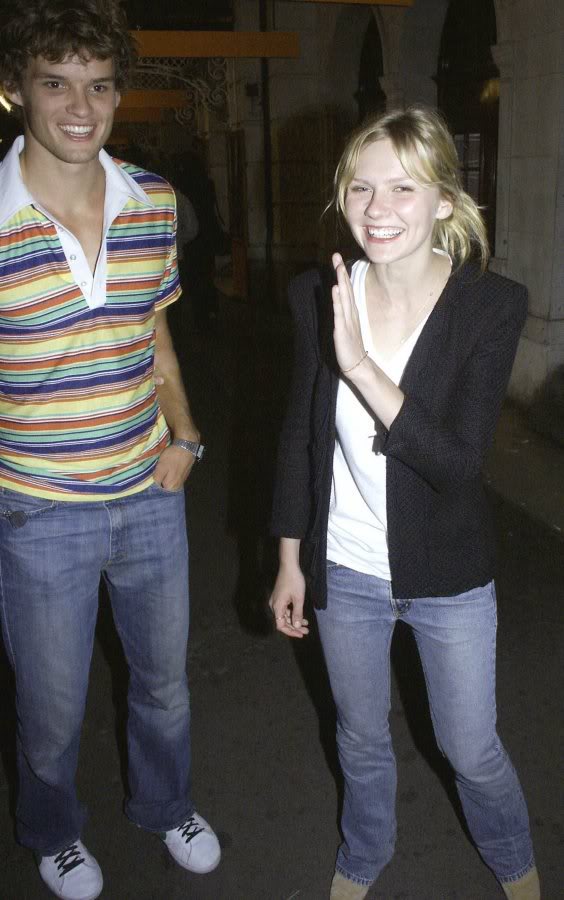
You can't take the stripes out of the boy.




Here's Jake and Ben Lyons chatting about "If There is..."
Whenever these two chat you never know where it's going to go.
Remember these?
Between a digital dance and Italian premiere something small happened that was very big five years ago.


How to Make Clickable Links in Posts
OMG Continuously Updated List of Famous Queer People. Do you have a name to add?
Help for a Real Life Case of Rendition


