
The battle against AIDS is being won, with deaths down, record numbers of people being treated, and new cases among children down by more than half. But not it is the ongoing discrimination against sufferers that is the biggest obstacle to winning the war, according to the head of the United Nations Joint Programme on HIV/Aids (UNAIDS).
One thing we must do is continue the cause of the fight against HIV/AIDS. We must continue educate and continue awareness about AIDS, just because people are living with HIV/AIDS no excuse to forget the cause. We must fight harder against the discrimination of those with the illness. And we must never forget the past and those who stood up and led the fight.

 Today's Out Spotlight was the first openly gay journalist to cover GLBT issues in the American mainstream press. He also wrote the first major book on the AIDS epidemic. Today's Out Spotlight is Randy Shilts.
 Randy Shilts was born August 8, 1951 in Davenport, Iowa. He grew up in Aurora, Illinois, with five brothers in a politically conservative, working-class family. He majored in journalism at the University of Oregon, where he worked on the student newspaper, the Oregon Daily Emerald, becoming an award-winning managing editor. During his college days, he came out publicly as a gay man at age 20, and ran for student office with the slogan "Come out for Shilts."
After coming out Shilts became head of the Eugene, Oregon Gay People's Alliance.

While at the top of class for journalism, being an openly gay reporter made it difficult for Shilts to find work. After working as the northwest correspondent for The Advocate, he moved to San Francisco to become a staff writer. He covered gay issues and city politics at San Francisco area television stations. He held positions at The Advocate and the San Francisco Chronicle and was the author of three books.
 Shilts wrote “The Mayor of Castro Street: The Life and Times of Harvey
Milk” (1982), when a biography about a gay political figure was
groundbreaking.
Shilts wrote “The Mayor of Castro Street: The Life and Times of Harvey
Milk” (1982), when a biography about a gay political figure was
groundbreaking. His New York Times best seller, “And the Band Played On: Politics, People and the AIDS Epidemic”
(1987), was the first major book about AIDS. It chronicles the first
five years of the epidemic and exposes the infighting and inaction that
led the virus to become a pandemic. The book
earned a nomination for the National Book Award and was translated into
seven languages. It was adapted into an Emmy Award-winning HBO film
starring Alan Alda, Anjelica Huston, Steve Martin, Matthew Modine and
Lily Tomlin.
His New York Times best seller, “And the Band Played On: Politics, People and the AIDS Epidemic”
(1987), was the first major book about AIDS. It chronicles the first
five years of the epidemic and exposes the infighting and inaction that
led the virus to become a pandemic. The book
earned a nomination for the National Book Award and was translated into
seven languages. It was adapted into an Emmy Award-winning HBO film
starring Alan Alda, Anjelica Huston, Steve Martin, Matthew Modine and
Lily Tomlin. While suffering from AIDS-related causes, Shilts dictated the last chapters of “Conduct Unbecoming: Gays and Lesbians in the US Military: Vietnam to the Persian Gulf” (1993). The work examines homophobia in the military and is based on more than 1,000 interviews.
In 1999, the Department of Journalism at New York University ranked Shilts's AIDS reporting for the Chronicle between 1981 and 1985 as number 44 on a list of the top 100 works of journalism in the United States in the 20th century.
Shilts never compromised his professional
integrity. In 1993, a year before he lost his battle with AIDS, he was
honored with the Lifetime Achievement Award from the National Lesbian
and Gay Journalists Association.
Shilts declined to be told the results of his HIV test until he had completed the writing of And the Band Played On, concerned that the test result, whatever it might be, would interfere with his objectivity as a writer. He was finally found to be HIV positive in March 1987. Although he took the anti-HIV drug AZT for several years, he did not publicly disclose his AIDS diagnosis until shortly before he died.
In 1992, Shilts came down with pneumocystis carinii pneumonia and suffered a collapsed lung; the following year, he came down with Kaposi's sarcoma. In a New York Times
interview in the spring of 1993, Shilts observed, "HIV is certainly
character-building. It's made me see all of the shallow things we cling
to, like ego and vanity. Of course, I'd rather have a few more T-cells
and a little less character." Despite being effectively homebound and on oxygen, he was able to attend the Los Angeles screening of the HBO film version of And the Band Played On in August 1993.

Shilts died, aged 42, at his 10-acre ranch in Guerneville, Sonoma County, California,
being survived by his partner, Barry Barbieri, his mother, and his
brothers. His brother Gary had conducted a commitment service for the
couple the previous year. After a funeral service at Glide Memorial Church, he was buried at Redwood Memorial Gardens in Guerneville.
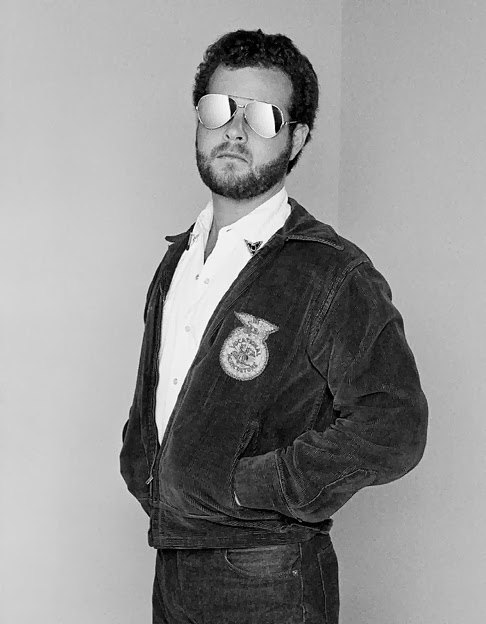 As a fellow reporter put it, despite an early death, in his books
Shilts "rewrote history. In doing so, he saved a segment of history from
extinction." Historian Garry Wills wrote of And the Band Played On, "This book will be to gay liberation what Betty Friedan was to early feminism and Rachel Carson's Silent Spring was to environmentalism." NAMES Project founder Cleve Jones
described Shilts as "a hero" and characterized his books as "without
question the most important works of literature affecting gay people."
As a fellow reporter put it, despite an early death, in his books
Shilts "rewrote history. In doing so, he saved a segment of history from
extinction." Historian Garry Wills wrote of And the Band Played On, "This book will be to gay liberation what Betty Friedan was to early feminism and Rachel Carson's Silent Spring was to environmentalism." NAMES Project founder Cleve Jones
described Shilts as "a hero" and characterized his books as "without
question the most important works of literature affecting gay people."After his death, a longtime friend and assistant explained the motivation that drove Shilts: "He chose to write about gay issues for the mainstream precisely because he wanted other people to know what it was like to be gay. If they didn't know, how were things going to change?"
"History is not served when reporters prize trepidation and
propriety over the robust journalistic duty to tell the whole story."


